Lohas Pet Supplies has brought renewed attention to the Double Door Pet Dryer Cabinet as grooming salons look for ways to reduce drying bottlenecks without simply extending working hours.
A busy grooming day does not usually slow down because bathing takes too long. In many cases, the delay appears after bathing, when several wet pets need drying before brushing, trimming, or styling can continue.
For one professional groomer, this became particularly noticeable as the daily schedule grew. The grooming table could handle the work, the bathing area was sufficiently organized, and the staff could complete the preparation stages on time. Drying, however, created a queue.
One pet occupied the drying area while another waited. When the coat was thick or particularly wet, the waiting period became longer. By the end of the day, these small delays had accumulated into a significant limit on the number of appointments that could be completed.
The solution was not simply to work faster. It was to rethink the drying stage.
Pet grooming is a sequence of connected tasks. A delay in one stage affects everything that follows.
A typical workflow looks like this:
Bathing → Water removal → Drying → Brushing → Trimming → Styling → Cleaning
Drying sits in the middle of this process. A pet cannot always move directly from bathing to finishing work, particularly when the coat remains damp or requires additional brushing during drying.
For short-haired pets, the process may be relatively quick. Dense double coats, curly coats, and long hair can require much more time.
The problem becomes more obvious when several appointments overlap.
If one drying compartment is available, the second pet may need to wait even though the groomer has already finished bathing. That waiting period does not improve the coat, but it still occupies part of the working schedule.
These two terms are easy to confuse.
Drying time is the period required for a pet's coat to reach the appropriate condition.
Waiting time is the period during which a pet cannot move forward because the required drying space is occupied.
A good workflow cannot always shorten the physical drying time. Coat thickness, moisture level, pet size, and individual tolerance all influence it.
It can, however, reduce unnecessary waiting.
| Workflow Issue | Effect on the Day | Possible Improvement |
|---|---|---|
| One pet occupies the only drying space | Another pet waits after bathing | Provide additional drying capacity |
| Different coat types need different drying periods | Appointment timing becomes less predictable | Allow more flexible drying arrangements |
| Staff repeatedly move pets between areas | More handling and interruptions | Keep drying organized in one area |
| Several wet pets arrive close together | Drying becomes a queue | Overlap appropriate drying tasks |
| Limited floor area | Additional equipment may obstruct movement | Consider a multi-compartment cabinet layout |
This is why drying equipment should be considered as part of the entire grooming workflow rather than as an isolated appliance.
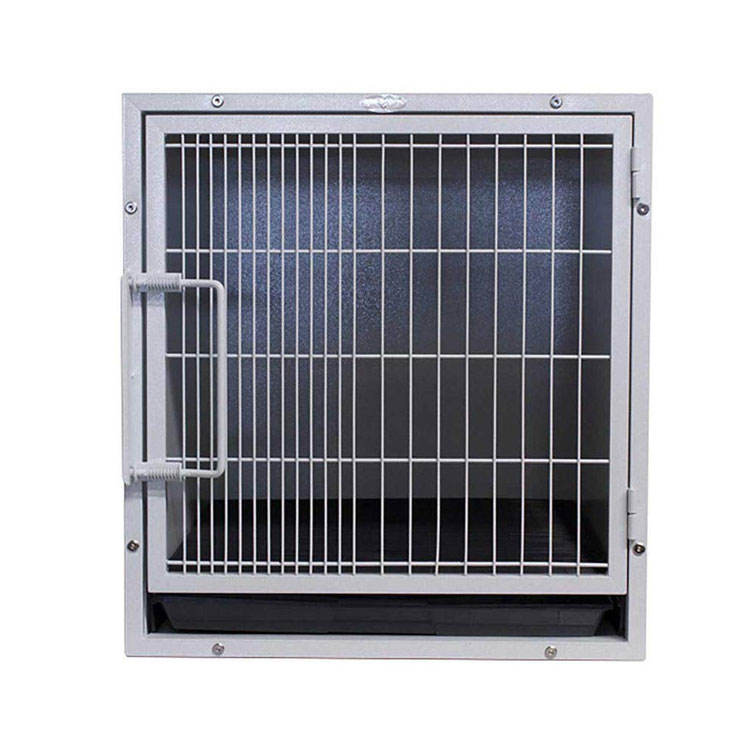
A double-door configuration creates two separate drying compartments within one cabinet structure.
That sounds like a small change, but its practical value appears when two pets need drying during the same period.
For example, a groomer may place a small dog in one compartment while another compartment is used for a larger dog. The two animals can be monitored independently, while the groomer prepares brushes, towels, tools, or the next grooming station.
The important point is that the compartments do not automatically mean every pet should be dried at the same time. Each animal still needs to be assessed according to its coat, size, behavior, and drying requirements.
The additional space simply gives the grooming team more choices.
Consider a salon with several morning appointments.
Without sufficient drying capacity:
Pet A bathes → Pet A dries → Pet B bathes → Pet B waits → Pet A finishes → Pet B dries
With two drying spaces:
Pet A bathes → Pet A dries in Space 1
Pet B bathes → Pet B dries in Space 2
While both drying processes are being monitored, the groomer can continue with preparation or other appropriate tasks.
This does not guarantee that the entire grooming process will take half as long. Other stages still require hands-on work.
What changes is the amount of time lost between stages.
More drying capacity does not remove the need for professional judgment.
Different coats behave differently when exposed to airflow.
A short coat may release moisture relatively quickly. A thick double coat can retain moisture underneath the outer layer. Curly or dense coats may require closer observation because the surface can appear dry while moisture remains deeper in the coat.
The pet's temperament also matters.
Some animals remain calm during drying, while others become uncomfortable with unfamiliar sounds or airflow. Drying should therefore remain a monitored process rather than an unattended step.
A consistent routine can make the equipment more useful:
The purpose is not to turn grooming into an automated process. It is to make the repetitive part of the workflow easier to organize.
A grooming salon rarely has unlimited floor space.
Tables, bathing stations, storage units, cages, dryers, sinks, and walking areas all compete for room. Adding separate pieces of equipment may increase capacity but also create obstacles.
This is one reason cabinet-style drying equipment can be useful in compact grooming environments.
A Double Door Pet Dryer Cabinet concentrates two drying spaces into one organized structure. It can make the drying area easier to define and may reduce the need to place separate units across different parts of the room.
For a new grooming room, the location of the cabinet should be considered together with electrical access, staff movement, cleaning procedures, ventilation, and the distance between bathing and grooming stations.
A machine that performs well but disrupts movement can create a new bottleneck.
Not necessarily.
This is an important distinction when discussing grooming efficiency.
If drying is the main bottleneck, increasing drying capacity can have a meaningful effect on daily throughput. But if brushing, trimming, bathing, cleaning, or appointment scheduling is already limiting capacity, additional drying space will not automatically double the number of completed appointments.
The professional groomer's experience demonstrates a more realistic principle:
Removing a bottleneck can increase capacity, but only when that bottleneck is actually controlling the workflow.
For some salons, drying may account for a large portion of the idle period between appointments. For others, the main limitation may be the number of grooming tables or the time required for styling.
The correct equipment decision therefore starts with observation rather than assumptions.
Before changing the drying setup, a salon can record its workflow for several working days.
Useful figures include:
After the drying arrangement changes, the same figures can be reviewed again.
This makes it easier to determine whether the additional capacity is actually improving the schedule.
It also prevents a common mistake: judging equipment only by the number of compartments or the appearance of the unit.
The real question is whether those compartments remove a recurring delay.
Efficiency cannot come at the expense of pet comfort.
Drying involves heat, airflow, noise, enclosed space, and animal behavior. The appropriate operating conditions depend on the individual pet and the equipment being used.
Staff should remain able to observe the animal and respond if the pet becomes distressed or uncomfortable.
A practical drying setup should therefore support three objectives at the same time:
Efficient workflow + controlled drying + appropriate pet supervision
Removing one of these elements can undermine the other two.
For this reason, the role of a drying cabinet is better understood as workflow equipment rather than simply a faster version of a conventional dryer.
As professional pet care becomes more structured, small workflow details are receiving more attention.
The difference between completing six and eight appointments in a day may not come from dramatically shortening every task. It may come from removing several small waiting periods that occur between tasks.
Drying is a good example.
One pet waiting for a drying space may not seem significant. Repeating that situation throughout the day can create a substantial loss of usable time.
A double-door arrangement provides another way to organize that stage. Two compartments allow drying activities to overlap when the animals and working conditions are suitable, while the cabinet format keeps the equipment concentrated in one defined area.
The professional groomer's increased daily capacity should therefore not be viewed simply as a story about a new piece of equipment. It is an example of a broader operational principle: grooming efficiency improves when equipment is matched to the actual bottleneck in the workflow.
For salons where drying repeatedly creates queues, a Double Door Pet Dryer Cabinet can offer a practical way to reorganize that stage without changing every other part of the grooming process. Zhejiang Lohas Pet Supplies Co., Ltd., whose pet-care range includes grooming tables and pet grooming dryers, reflects this growing focus on equipment designed around the everyday requirements of professional pet care.