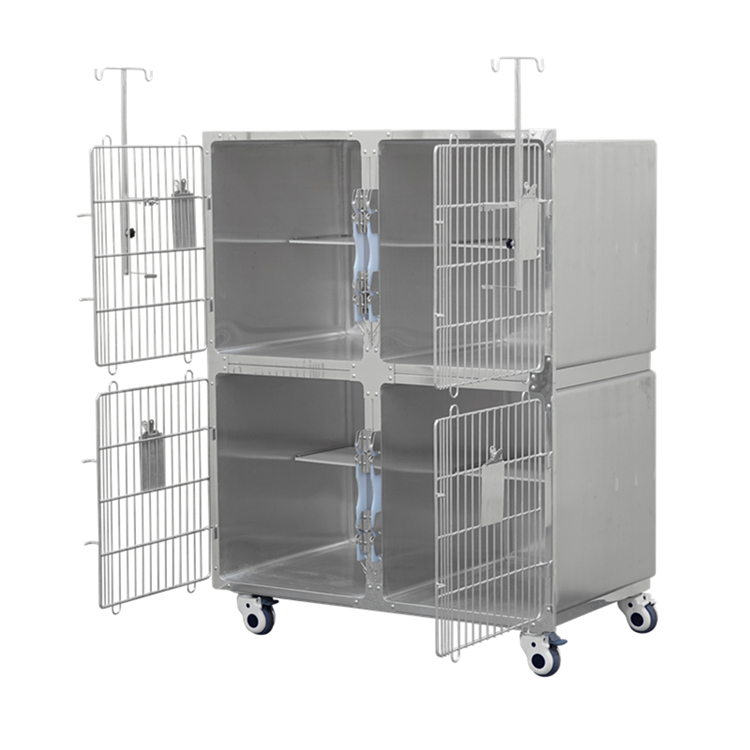
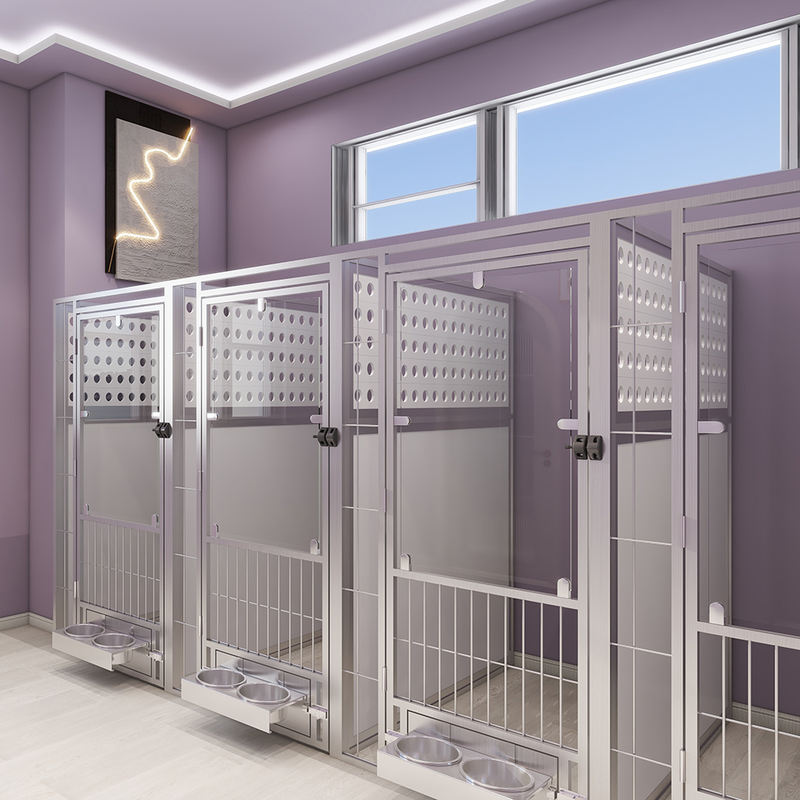
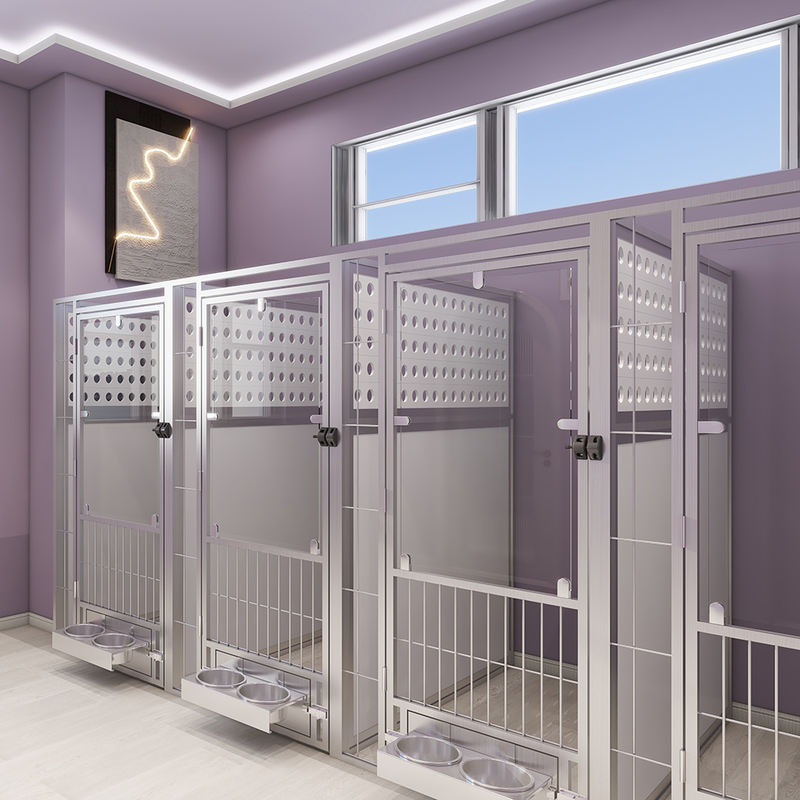
A Combination Cabinet Cattery Cage is designed for situations where several cats need to be housed, managed, or temporarily separated within the same organized enclosure system. Compared with placing multiple standalone cages around a room, a cabinet-style combination cage can make better use of vertical space while keeping individual areas clearly arranged.
However, choosing a suitable cattery cage is not simply about finding the largest or most attractive model. The number of cats, available room, cleaning routine, ventilation, accessibility, and intended use all affect which configuration makes sense. This guide explains the main points to consider before purchasing or setting up a combination cabinet cattery cage.

The right application depends on how cats are housed and managed.
For households with several cats, a combination cage can provide separate spaces without requiring multiple independent cages. This can be useful when cats need temporary separation or when a dedicated housing area is required.
The main benefit is organization. Food, litter, resting areas, and individual spaces can be arranged within a defined area instead of being distributed throughout the room.
Pet shops and professional catteries often need to manage several cats at the same time. A cabinet-style system can help organize the available space and make individual housing easier to monitor.
For commercial users, accessibility is especially important. Staff may need to open individual compartments, clean litter trays, provide food, and observe different cats throughout the day.
Breeding environments may require different cats to be housed separately at certain times. A multi-compartment cage can provide a more organized approach to temporary separation and daily management.
The cage should still be selected according to the animals' size, behavior, and the amount of time they will spend inside.
There is no universal configuration that works for every user. Before purchasing, consider the following factors.
Start with the number of cats that need to be housed.
A system with several compartments may be more useful for multiple cats than one large shared enclosure, particularly when individual separation is necessary.
However, the number of compartments should not be the only consideration. Each cat needs adequate usable space, and the cage should not be overcrowded simply because several compartments are available.
The size and behavior of the cats affect the required cage configuration.
A cage suitable for kittens may not provide enough usable space for larger adult cats. Active cats may also need more room for movement than cats using the enclosure mainly for resting or temporary housing.
When comparing products, look beyond the external dimensions and consider the actual usable space inside each compartment.
Measure the installation area before purchasing.
Remember to leave enough surrounding space for:
A cage may physically fit into a room but still be inconvenient if there is not enough clearance around it.
Combination cabinet cages often make use of vertical space. This can be useful in smaller rooms where floor area is limited.
However, vertical arrangements should still be easy for staff or owners to access. If upper compartments are difficult to reach, routine cleaning and animal management can become less convenient.
For commercial facilities, accessibility should therefore be considered alongside space efficiency.
Material affects durability, cleaning, appearance, and long-term maintenance.
Stainless steel is commonly considered for professional pet housing because it provides a hard, washable surface and is suitable for environments where frequent cleaning is required.
For catteries, pet shops, and breeding facilities, stainless steel can be particularly practical when hygiene and routine maintenance are important.
Metal frames, doors, mesh sections, and hardware can provide structural support for cage systems. Buyers should examine how these components are joined and finished rather than considering material type alone.
Some cabinet-style cages may use panels or boards as part of the enclosure. When evaluating these products, buyers should consider the panel material, surface treatment, moisture resistance, and how easily the surfaces can be cleaned.
The important point is to evaluate the complete construction, not simply ask whether a cage is made from metal or another single material.
A cabinet-style enclosure has more enclosed areas than an open wire cage, so ventilation deserves particular attention.
Adequate air circulation helps prevent the enclosure from becoming excessively enclosed and can also make it easier to manage odors.
When evaluating a cage, check:
Ventilation should work together with regular cleaning rather than being treated as a replacement for hygiene management.
Cleaning is one of the most important practical considerations for any professional cat housing system.
Removable trays can make it easier to remove litter and waste without dismantling the cage. They are particularly useful when multiple compartments need to be cleaned regularly.
Shelves, platforms, and other internal components should be easy to reach and clean. Complicated structures can create areas where dirt and litter accumulate.
Smooth, appropriately finished surfaces are generally easier to wipe and maintain than rough or difficult-to-access surfaces.
For commercial users, it is useful to think about the cage from the perspective of the person who will clean it every day rather than only looking at the product when it is new.
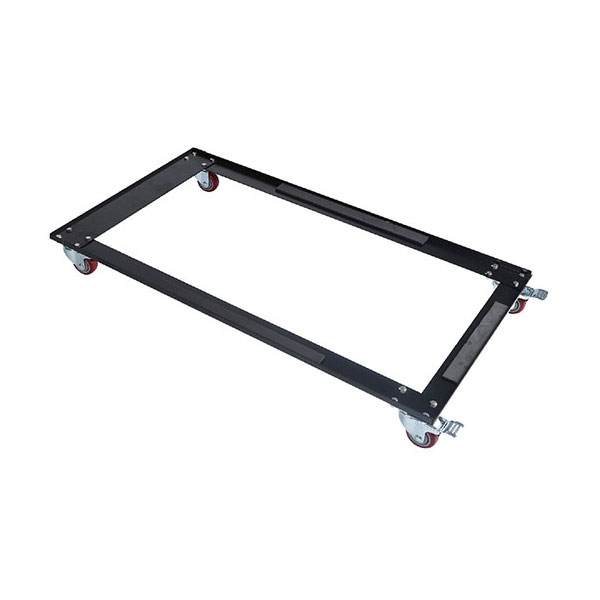
Castors can be useful when the cage needs to be moved for cleaning, rearrangement, or maintenance.
A wheeled cage can make it easier to clean the floor underneath and reposition the unit when the room layout changes.
However, mobility should not come at the expense of stability. Buyers should check whether the wheels can be secured when the cage is in its normal operating position.
For a permanently installed cattery, wheels may be less important. For pet shops or facilities that frequently rearrange their spaces, they can be more useful.
The interior arrangement should support the basic needs of the cats while making daily care manageable.
A practical setup may consider separate areas for:
The exact arrangement depends on the cage design and the length of time cats will remain inside.
For multiple cats, individual compartments can also make monitoring easier. If one cat needs to be separated, staff can manage that space without disturbing every other animal in the system.
For buyers comparing different combination cabinet cattery cages, the following checklist can help:
| Buying Factor | What to Check |
|---|---|
| Capacity | Number of compartments and suitable cat size |
| Dimensions | Overall size and usable internal space |
| Construction | Frame, panels, doors, and connection methods |
| Ventilation | Air circulation and opening design |
| Cleaning | Removable trays and accessible surfaces |
| Mobility | Castors and stability when stationary |
| Access | Door position and ease of reaching each compartment |
| Maintenance | Ease of replacing or cleaning components |
| Packaging | Protection during storage and transportation |
| Customization | OEM/ODM availability if required |
For wholesale buyers, additional considerations may include minimum order quantity, packaging requirements, production lead time, sample availability, and customization capability.
A cabinet cage may look attractive in product photographs but still be inconvenient to clean or access. Practical operation should be considered before appearance.
A cage that takes too long to clean can become inefficient in a busy pet shop or cattery. Removable trays and accessible internal components can make a significant difference.
A large overall cabinet does not necessarily mean every compartment provides sufficient usable space. Check the internal layout and individual compartment dimensions.
The cage itself may fit into the room, but doors, trays, and maintenance areas also need clearance.
If the number of cats is likely to increase, buyers should consider whether the selected system can accommodate future requirements or whether additional units will be needed.
For wholesalers, pet retailers, catteries, and other professional buyers, product consistency and supply capability are as important as the cage design itself.
A supplier should be able to clearly provide information about:
OEM and ODM support can also be useful for businesses developing their own pet furniture or cage product ranges.
Regular maintenance should cover both the cage and its moving or removable components.
Clean litter trays and internal surfaces regularly, check doors and connections for wear, and inspect castors if the unit is designed to move.
Pay particular attention to areas where moisture, litter, food, or hair may accumulate. Early cleaning and maintenance can prevent small problems from becoming more difficult to address later.
For commercial facilities, it is useful to establish a consistent cleaning schedule rather than relying only on visible dirt.
Yes, its main purpose is to provide several organized housing spaces within one overall structure. However, the appropriate configuration depends on the number and size of cats and whether they need to be housed together or separately.
They can be suitable for pet shops because the multi-compartment design can help organize several cats within a defined area. Ease of access and cleaning should be considered when selecting a model.
Both matter. More compartments can improve organization, but each compartment must still provide appropriate usable space for the cat using it. The best choice depends on the animals and the intended use.
Stainless steel surfaces are generally practical for regular cleaning, but the overall design also matters. Removable trays, accessible shelves, smooth surfaces, and easy-to-reach doors can make routine maintenance more efficient.
Not necessarily. Wheels are useful when the cage needs to be moved for cleaning or rearrangement, but a fixed cage may not require them. If wheels are included, stability when stationary should also be considered.
Some manufacturers offer OEM/ODM services, allowing buyers to discuss changes to configuration, dimensions, materials, finishes, or other product requirements. Customization should be confirmed with the supplier before ordering.